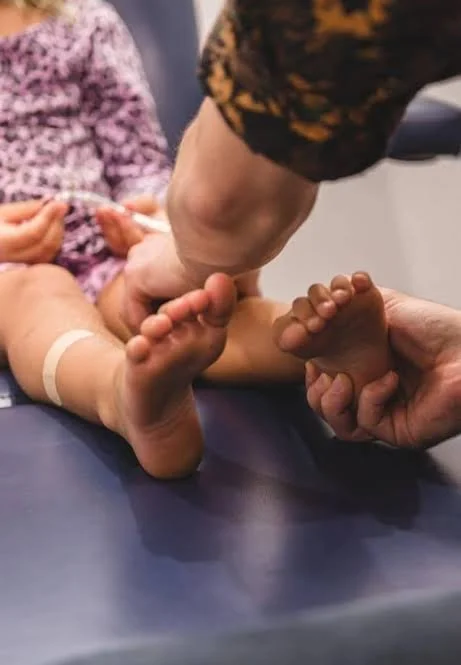
Helping Little Feet Grow Strong
Children’s feet are constantly growing and developing. From those exciting first steps through to school, sports and adolescence, healthy foot development plays an important role in your child’s mobility, balance and confidence.
At Revival Podiatry, we provide comprehensive assessment and treatment for children of all ages. Whether your child is experiencing pain, walking differently, or you’re simply concerned about their foot development, our podiatrists are here to provide expert advice and personalised care.
Many childhood foot concerns are a normal part of growth, while others may benefit from early assessment and intervention. Our goal is to help your child stay active, comfortable and confident as they grow.
When Should My Child See a Podiatrist?
Children don’t always tell you when their feet hurt. Instead, you may notice changes in the way they walk, run or participate in activities.
It may be worth booking an assessment if your child:
Frequently complains of foot, heel or leg pain
Walks on their toes
Trips or falls more than expected for their age
Has very flat feet or feet that appear to roll inwards
Walks with their toes pointing in or out
Avoids running or sporting activities due to pain
Wears shoes unevenly
Develops recurring ingrown toenails or painful corns
Has warts on their feet
Has concerns with balance or coordination
Early assessment can often identify whether these findings are part of normal development or require treatment.
Common Conditions We Treat
Growing Pains
Many parents worry about growing pains. While growing pains are common, not all leg pain in children is simply “growing pains.”
Our podiatrists assess your child’s walking pattern, muscle flexibility, foot posture and lower limb function to determine whether biomechanical factors may be contributing to their symptoms.
Flat Feet
Flexible flat feet are common in young children and often improve naturally with age.
However, if flat feet are causing pain, fatigue, frequent tripping or limiting participation in activities, treatment may be beneficial.
Management may include:
Footwear advice
Strengthening exercises
Activity advice
Custom foot orthoses when clinically appropriate
Heel Pain (Sever’s Disease)
Heel pain is one of the most common sports injuries seen in active children between approximately 8 and 14 years of age.
Sever’s disease occurs due to irritation of the growth plate at the back of the heel and is commonly associated with running and jumping sports.
Treatment may include:
Activity modification
Stretching programmes
Heel lifts or orthoses
Footwear recommendations
Return-to-sport guidance
Toe Walking
Occasional toe walking is common in toddlers learning to walk. However, persistent toe walking beyond the early years may benefit from assessment.
We evaluate muscle flexibility, ankle range of motion and gait to determine whether further management or referral is required.
Ingrown Toenails
Ingrown toenails can affect children and teenagers, particularly during periods of rapid growth or participation in sport.
We provide gentle, child-friendly treatment along with education on correct nail cutting and footwear to help prevent recurrence.
Plantar Warts
Plantar warts are caused by the human papillomavirus (HPV) and are particularly common in school-aged children.
Although some resolve naturally, others become painful or spread.
We offer a range of treatment options and will recommend the most appropriate approach based on your child’s age, symptoms and activity level.
Sports Injuries
As children become more active in sport, they may develop overuse injuries affecting the feet and lower limbs.
We commonly assess:
Heel pain
Achilles pain
Shin pain
Forefoot pain
Stress injuries
Ankle sprains
Tendon injuries'
What Happens During a Children’s Podiatry Appointment?
Our appointments are relaxed, friendly and designed to help children feel comfortable.
Your podiatrist will:
Discuss your concerns and your child’s symptoms
Review their medical history and activity levels
Assess foot posture and lower limb alignment
Observe walking and running patterns
Assess muscle strength and flexibility
Examine footwear where appropriate
Explain findings in easy-to-understand language
If further investigations such as X-rays or ultrasound are required, we’ll discuss this with you and provide appropriate referrals.
Our Treatment Approach
Every child develops differently, so treatment is always individualised.
Depending on your child’s needs, treatment may include:
Footwear recommendations
Strengthening and stretching exercises
Balance and coordination activities
Activity modification
Custom foot orthoses when appropriate
Heel lifts or padding
Management of skin and nail conditions
Education for parents and children
Where necessary, we also work closely with GPs, physiotherapists, paediatricians and other healthcare professionals to ensure your child receives the best possible care.
Book a Children’s Podiatry Assessment
If you’re concerned about your child’s feet, walking pattern or lower limb pain, we’re here to help.
Whether they’re taking their first steps, playing weekend sport or preparing for representative competition, our experienced podiatrists can assess their foot health and provide personalised advice to help them stay active and pain-free.