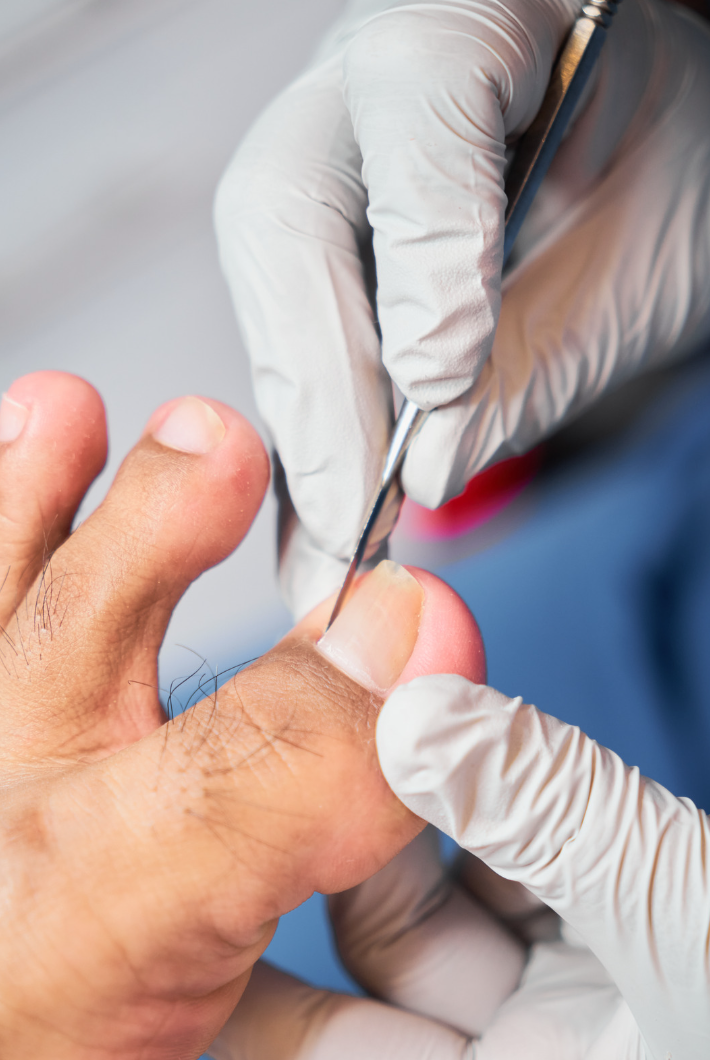
What is an Ingrown Toenail?
An ingrown toenail (also known as onychocryptosis) occurs when the edge or corner of the toenail grows into the surrounding skin instead of over it.
This most commonly affects the big toe and can lead to:
Pain and tenderness
Redness and swelling
Bleeding
Infection
Pus or discharge
Difficulty walking or wearing shoes
If left untreated, ingrown toenails can become increasingly painful and infected, and in some cases may develop excessive skin growth (granulation tissue) around the nail.
What Causes Ingrown Toenails?
Ingrown toenails can develop due to a number of reasons, including:
Cutting nails too short
Rounding the corners of the nails
Tight footwear or high heels
Trauma to the nail
Thickened or curved nails
Genetic nail shape
Poor foot biomechanics
Some people are simply more prone to developing ingrown toenails due to the natural shape or thickness of their toenails.
How Can a Podiatrist Help?
Many people attempt to manage ingrown toenails themselves at home, however, this can often make the condition worse and increase the risk of infection.
At Revival Podiatry, our Podiatrists can:
Remove the offending nail edge safely
Reduce pain and pressure immediately
Treat infection if present
Apply antiseptic dressings
Provide footwear advice
Educate on correct nail cutting techniques
Prevent recurrence with ongoing management
Early treatment can often prevent the need for surgery.
Ingrown Toenail Treatment Options
Treatment will depend on the severity of the ingrown toenail.
Conservative (Non-Surgical) Treatment
Suitable for mild to moderate cases:
Removal of the ingrown nail spike
Nail edge re-shaping
Packing or splinting
Nail bracing
Infection management
Pressure offloading
This provides immediate relief and may be all that is required in early-stage ingrown toenails. However, recurrence is still possible if the nail continues to grow inwards.
2. Ingrown Toenail Surgery (Partial Nail Avulsion)
For recurrent or severely infected ingrown toenails, a minor nail procedure may be recommended.
A Partial Nail Avulsion (PNA) is a safe and commonly performed procedure which involves:
Numbing the toe with local anaesthetic
Removing the ingrown portion of the nail
Applying a medical chemical solution (such as Phenol) to prevent that section of nail from regrowing
Dressing the toe for protection during healing
This procedure is:
Performed in the clinic
Takes approximately 60 - 90 mins
Has a high success rate
Minimally invasive
Allows you to walk out afterwards
Only a small portion of the nail is removed - the overall appearance of the nail should remain natural.
After the procedure:
Most patients can return to normal daily activities within 24 - 48 hours
Some drainage from the toe is expected for 2 - 4 weeks
Simple dressing care is required at home
Follow-up appointments will be arranged to monitor healing
Our team will provide you with detailed aftercare instructions to ensure a smooth recovery.
When Should You See a Podiatrist?
You should seek professional care if you notice:
Ongoing pain
Signs of infection
Recurrent ingrown toenails
Difficulty walking
Bleeding or pus
Early intervention can prevent complications and avoid the need for surgery.